 Back or neck pain can be frustrating enough on its own. When terms like “bulging disc” or “herniated disc” are brought up, it can get even more confusing. These conditions are related, but not the same, and understanding the difference may help you make more informed decisions about your care.
If you’re searching for help with either condition in Toledo, Frame Chiropractic and Acupuncture can evaluate what may be contributing to your symptoms and discuss treatment options.
What Happens When a Disc Bulges?
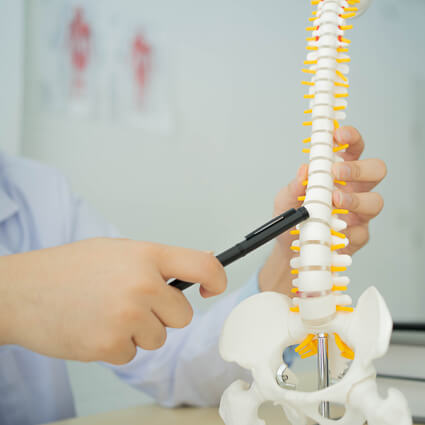
The cushions between your vertebrae help absorb forces and allow your spine to move. A bulge occurs when the outer portion of one of these cushions extends beyond its normal boundary over a broad area.
Think of it somewhat like a tire bulging outward: the outer layer extends without the inner material necessarily breaking through it. This change does not always cause pain. In fact, some people have changes visible on imaging without experiencing symptoms.
When a bulge irritates or places pressure on a nearby nerve, however, symptoms can include back or neck pain, tingling, numbness, or radiating discomfort.
How a Herniation Differs From a Bulge
A herniated disc occurs when material from the softer center pushes through a weakened or torn area of its outer layer. Unlike a broad bulge, a herniation involves a more localized displacement of this material. Whether it causes symptoms depends partly on its location and whether nearby nerves are affected.
Depending on the location, a herniation may cause:
- Lower back or neck pain
- Pain traveling into an arm or leg
- Sciatica when nerve roots in the lower back are affected
- Numbness or tingling
- Muscle weakness
- Pain that becomes worse with certain movements
Herniations most commonly occur in the lower back, although they can also develop in the neck. Like bulges, they sometimes cause no symptoms.
Do You Need Surgery for Disc Pain?
Not necessarily. Most people with a herniation do not require surgery, and initial treatment is typically conservative.
At Frame Chiropractic and Acupuncture, care begins with reviewing your symptoms, movement, spinal function, and health history. Depending on your examination findings, recommendations may include exercises, activity changes, chiropractic care, or massage therapy to help manage discomfort and improve movement.
Other services offered at the practice include spinal decompression, acupuncture, and dry needling. Their suitability, evidence, risks, and alternatives should be discussed individually; these approaches should not be presented as repairing a damaged disc.
The goal isn’t simply to chase the location where you hurt. It is to identify factors that may be contributing to nerve irritation, restricted movement, or muscular tension. Further testing or referral may be recommended when symptoms persist or worsen.
When Symptoms Need Emergency Care
Severe or rapidly worsening weakness, new difficulty urinating, loss of bladder or bowel control, or numbness around the groin or saddle area requires emergency medical evaluation. These symptoms can indicate serious nerve compression.
Discuss Your Back or Neck Pain With Our Toledo Team
Whether you’ve been diagnosed with a bulging disc, suspect a herniation, or simply can’t figure out why your back or neck pain keeps returning, an evaluation can help determine your next steps.
Contact Frame Chiropractic and Acupuncture to discuss your symptoms and whether conservative care is suitable for you.
Clinical reviewer: Dr. Zachary Frame, D.C.